Driving the Nürburgring Nordschleife: A First-Timer's Guide to 2026 Touristenfahrten
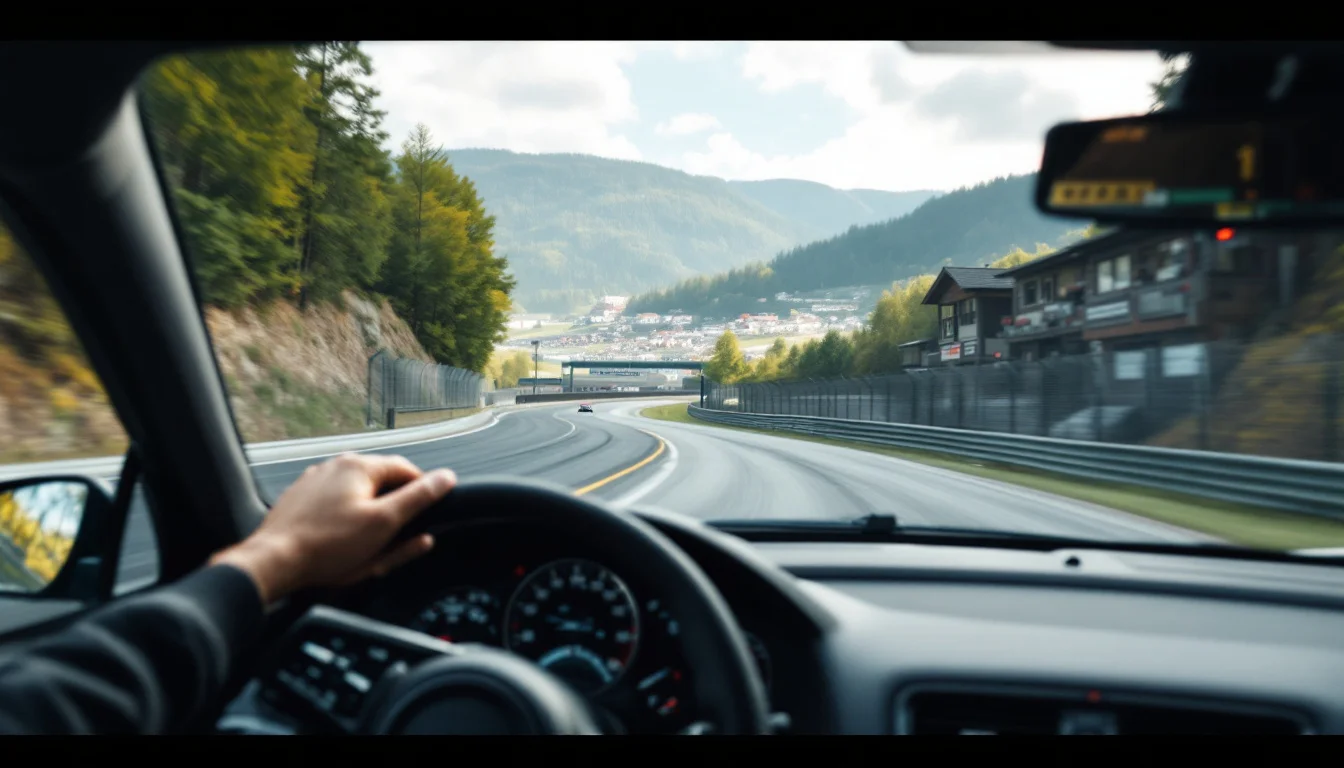
The motorsport world has firmly turned its attention to the Eifel mountains this year. The historic circuit, known worldwide as the Grüne Hölle (Green Hell), experienced a surge in popularity coinciding with high-profile entries in the spring endurance events. Yet the true magnetism of the Nürburgring is not just in watching the professionals; it is the unique ability for everyday enthusiasts to drive the exact same tarmac. During public driving sessions, the track opens its gates to the public. For automotive enthusiasts, this offers a uniquely accessible entry point into track driving. However, balancing the immense thrill of this historic venue with its unforgiving physical realities requires strict adherence to etiquette, a clear understanding of the costs, and careful preparation.
Key Takeaways
- 2026 Season Schedule: According to Autoblog.nl, the Touristenfahrten (tourist drives) season at the Nürburgring Nordschleife was scheduled to begin on Saturday, 7 March 2026, and runs until 15 November 2026.
- Standard Lap Costs: Autoblog.nl reports that in 2026, a single lap of the Nordschleife costs €30 from Monday to Thursday.
- Peak Lap Costs: On Fridays, weekends, and public holidays, participants pay a €5 surcharge, bringing the price to €35 per lap.
- Operating Concept: The circuit operates as a delimited public toll road during these sessions, meaning normal road rules apply and traditional track day racing behavior is strictly forbidden.
Why Pay-Per-Lap Beats a Traditional Track Day
For automotive enthusiasts in Western Europe, the logistics of a dedicated track day can often represent a significant barrier to entry. Traditional circuit sessions at local venues typically require drivers to book half or full days far in advance, resulting in substantial upfront costs. The Nürburgring offers a completely different operational model that dramatically lowers this initial financial hurdle.
The geographical location of the circuit makes it highly attractive for day trips. The Nordschleife is a drive of a good 1.5 hours from the German border city of Aachen. This close proximity means that drivers from Belgium and the Netherlands can easily access the track without booking overnight accommodation, making a spontaneous weekend outing entirely feasible.
The Pay-Per-Lap Financial Model
The fundamental difference between the Nürburgring and traditional circuits lies in its ticketing structure. Touristenfahrten work on a strict pay-per-lap basis. Because the Nordschleife is the old section of the Nürburgring, it operates under unique rules where, unlike a normal track day, you buy individual laps during these so-called 'tourist drives'. This allows a first-timer to purchase just a single lap to test the waters without committing hundreds of euros to a full day of track time. As noted by automotive platform Gocar, a single Touristenfahrten lap is considerably cheaper than a standard circuit session at Zolder, Spa-Francorchamps, or Mettet.
2026 Pricing Comparison
For drivers planning their 2026 itinerary, the Nürburgring complex offers distinct driving experiences with separate pricing structures, as detailed by Autoblog.nl.
| Track Configuration | Driving Format | 2026 Rate |
|---|---|---|
| Nordschleife (Monday–Thursday) | 1 Lap | €30 |
| Nordschleife (Friday–Sunday & Holidays) | 1 Lap | €35 |
| Grand Prix Circuit | 15 Minutes | €35 |
| Nordschleife Season Pass | Annual | €3,000 |
While the Nordschleife charges per lap, drivers who prefer a more modern, conventional track layout can opt for the newer adjacent facility. A 15-minute public driving session on the Nürburgring Grand Prix circuit costs €35 in 2026. This allows visitors to mix and match their driving experiences based on their budget and confidence levels.
Is a season pass worth the investment?
For regular track attendees, the financial logic of a season pass depends on purchase timing. According to Autoblog.nl, the standard price for the rest of the year is €3,000. However, a 2026 Nürburgring season pass cost €2,750 if ordered before 15 January. Furthermore, loyalty was rewarded: holders of a 2025 season pass paid only €2,500 in the pre-sale phase. A Nürburgring season pass also gives access to a backstage tour, participation in an exclusive track walk, and a voucher for the ring°fanshop. Additionally, pass holders receive structural discounts on Nürburgring Driving Academy offers, the Nürburgring eSports Bar, various circuit restaurants, and stays in the Nürburgring Hotels & Ferienpark.
What Actually Happens During 'Touristenfahrten'?
Understanding the mechanics of a tourist drive is crucial before passing through the entry barriers. The Nordschleife is not a modern racing facility during these hours; it operates as a delimited public toll road under German traffic laws. This distinction dictates everything from insurance liabilities to passing rules, which strictly mandate overtaking on the left only.
A Layout Trapped in Time
The circuit's infamous reputation is deeply tied to its historical construction. Because the old track wound through the woods with very short run-off areas, it was incredibly dangerous and difficult for emergency services to reach. This hazardous environment is precisely why Formula 1 abandoned the old layout in the 1970s, with a new, shorter version later built alongside it. Today, that old layout remains virtually unchanged, meaning tourist drivers face the exact same unforgiving barriers and blind crests that challenged professional racers decades ago.
The Mixed Traffic Reality
The most jarring aspect of Touristenfahrten for a beginner is the sheer diversity of the vehicles sharing the tarmac. During a typical session, you share the track with hundreds of other enthusiasts of all kinds. The spectrum ranges from curious drivers navigating the circuit in a standard family car to track-day regulars operating prepared Porsche 911 models.
This speed differential creates a chaotic environment. Many of these experienced regulars are actively trying to improve their own lap record. While timing a lap is strictly not allowed during tourist drives, it happens covertly because it simply cannot be checked by the marshals. Consequently, beginners must be hyper-aware that high-speed traffic will rapidly approach from behind at almost every section of the course.
Administrative and Operational Realities
Beyond the on-track challenges, first-timers must also consider administrative hurdles. Standard road car insurance policies typically exclude damage incurred during Touristenfahrten sessions. Additionally, tourist drives are frequently delayed, red-flagged, or cancelled entirely due to weather, on-track incidents, or scheduled noise-reduction days, meaning a planned trip can quickly be altered.
First-Timer Survival Protocol
Surviving a first lap requires transitioning from a mindset of performance to one of absolute preservation. To manage the risks inherent to the old track, first-timers must sequence their preparation across mental readiness, on-track etiquette, mechanical sympathy, and emergency protocols.
1. Confronting the Physical Scale
The sheer volume of track data a driver must process is staggering. According to regional data from Eifelinfo, the historic Nordschleife is 20.832 kilometres long, features 73 corners, and encompasses more than 300 metres of elevation difference. Memorizing a layout of this magnitude is virtually impossible for a newcomer. Drivers should abandon any attempt to push their limits and instead focus solely on reading the immediate road surface ahead.
2. Managing Micro-Climates
The vast geographic footprint of the circuit creates unique environmental hazards. The Nordschleife is a notoriously difficult circuit to learn, compounded by sudden elevation changes and highly unpredictable weather conditions. Because the track covers so much forested terrain, it can literally be sunny on one side of the circuit and raining on the other. A dry entry at the timing gantry does not guarantee a dry braking zone halfway through the forest.
3. Navigating On-Track Etiquette
Traffic management is the most critical survival skill during a tourist session. Automotive platform Gocar advises first-timers to constantly keep an eye on their mirrors but to focus primarily on the upcoming corners by looking as far ahead as possible. The golden rule is to always let experienced drivers pass safely. The objective is not to set a fast time, but above all to enjoy the experience of driving an automotive monument.
4. The Mechanical Cool-Down Phase
The extreme length and elevation changes place immense stress on standard road car components, particularly brakes and cooling systems. Gocar strongly recommends that at the end of the lap, you should give the car time to cool down over the last kilometres. This is achieved by no longer braking at full force and deliberately lowering engine revs before exiting the track, preventing fluid boil and component warping.
5. Emergency Readiness
Even with perfect etiquette, the hazardous nature of the track means incidents occur frequently. Preparation requires knowing exactly who to contact if you witness or are involved in an incident. From 2026, the Nürburgring has introduced a new central emergency number for tourist drives: +49 2691 302 9111. According to Autoblog.nl, participants can call this number for questions and immediately in case of an incident. Save it before you drive.
Motorsport Context: Why 2026 is a Milestone Year
The heightened interest in driving the Nordschleife this season cannot be divorced from the historic motorsport events that took place earlier in the year. The circuit re-entered mainstream global consciousness due to an extraordinarily high-profile endurance race that brought international media attention to the Eifel region.
A Record-Breaking Grid
According to AD.nl, the 2026 Nürburgring 24 Hours, held on 16 and 17 May, had a massive scheduled entry list for this edition. The provisional entry list included 27 Dutch drivers taking on the grueling challenge.
The Verstappen Factor
According to the Dutch publication AD, the primary catalyst for the massive anticipated spectator turnout was the entry of reigning Formula 1 talent. Max Verstappen drove the 2026 Nürburgring 24 Hours in the highly competitive GT3 class. He piloted a Mercedes-AMG GT3, sharing the driving duties with Austrian Lucas Auer, Frenchman Jules Gounon, and Spaniard Daniel Juncadella. This crossover of top-tier motorsport figures attempting to conquer the Nordschleife has inspired a massive wave of enthusiasts to try the circuit themselves during the public 2026 Touristenfahrten sessions.
Frequently Asked Questions (FAQ)
Do I need special insurance for a Touristenfahrten lap?
Because the Nordschleife operates as a delimited public toll road under German traffic laws, normal road rules apply. However, standard road car insurance policies typically exclude damage incurred during Touristenfahrten sessions. First-timers should consult their provider beforehand, as many need to seek specialized track-day insurance to ensure coverage for potential incidents on the circuit.
What happens if it rains on one part of the track?
The vast geographic footprint of the 20.832-kilometre circuit creates unpredictable micro-climates. Because the track covers extensive forested terrain, it can literally be sunny on one side and raining on the other. A dry entry does not guarantee a dry braking zone later in the lap, requiring drivers to constantly read the immediate road surface ahead rather than pushing their limits.
Conclusion: A Respectful Checkered Flag
Tackling the Nordschleife is less about demonstrating driving prowess and entirely about managing risk in a highly dynamic, historically dangerous environment. Looking ahead, the growing traffic levels inspired by the 2026 milestone year mean that first-timers must remain even more vigilant. The survival of the public toll road model relies entirely on the collective discipline of its participants. By actively yielding to faster traffic, anticipating abrupt micro-climates, and recognizing the physical limitations of standard road vehicles, drivers protect both themselves and the legacy of the circuit. Treating the tarmac with the profound respect it commands ensures that the gates remain open for the next generation of enthusiasts seeking to experience the reality of the mountains.