How to Choose the Perfect Sim Racing Rig for an Apartment: Space-Saving Solutions
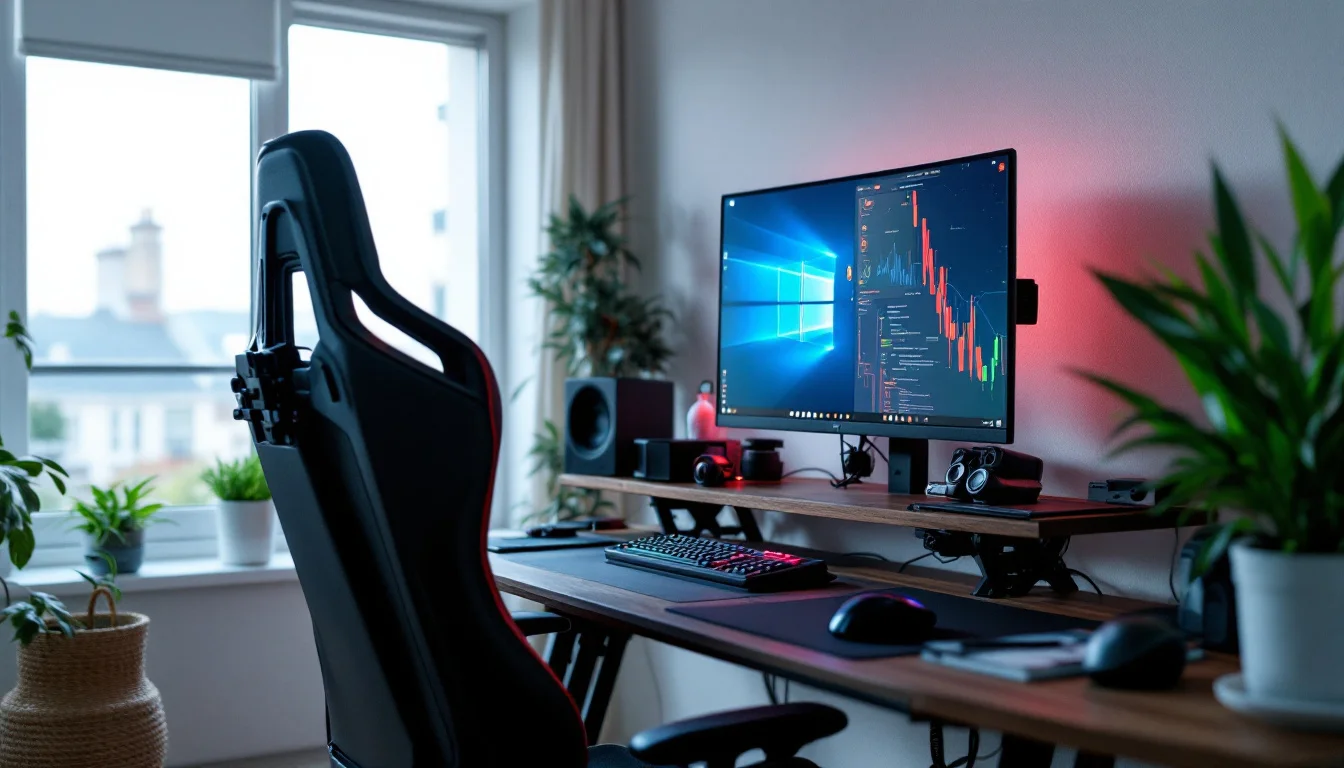
For modern racing enthusiasts living in urban apartments, building a dedicated simulator requires precise spatial planning. The pursuit of realistic force feedback and visual fidelity often clashes with the physical constraints of a shared living room or a narrow home office.
The challenge for apartment dwellers is balancing the desire for absolute immersion with the stark reality of limited square footage. Navigating the current hardware landscape means evaluating exactly how much floor space every component demands. By making strategic choices regarding display technologies, understanding strict console limitations, and prioritizing highly modular equipment over disposable entry-level gear, urban racers can construct a driving environment that seamlessly integrates into a compact living space.
Key Takeaways
- Prioritize modular architecture: Investing in a stiff aluminum-profile cockpit helps avoid the accumulation of non-upgradeable starter setups that consume valuable closet space.
- Optimize visual footprints: Virtual Reality (VR) headsets demand zero additional desk space, making them a highly space-efficient option for PC sim racing in small rooms.
- Understand console limits: Console players must design their floor plans around a standard television, as current systems generally do not natively support space-efficient ultrawide resolutions or multi-screen configurations for major sim titles.
- Master confined assembly: Construct heavy hardware loosely at first, finalizing the seating position before fully tightening bolts to avoid impossible adjustments in tight corners.
The 'Buy Once' Philosophy: Why Modular Aluminum Rigs Save Space
A common trap for apartment dwellers is attempting to save space by purchasing temporary, folding hardware. However, this often leads to a cycle of upgrading and storing obsolete equipment. Retailer GPerformance emphasizes a core buying principle for beginners: nothing you buy now should have to be thrown away later. By adopting this "Buy Once" philosophy, users avoid cluttering their apartments with discarded plastic stands and redundant wheelbase mounts. (Note: Pricing and build recommendations throughout this guide are based on retailer suggestions; comparable components are available from various manufacturers.)
The Cost of a Serious Footprint
While ultra-budget setups exist, building a permanent, space-efficient foundation requires a specific initial investment. According to current pricing from GPerformance, a serious setup built around a direct drive wheelbase, load cell pedals, and a stiff aluminum-profile cockpit costs roughly EUR 1,500 to 3,000 to start. This represents the entry point for rigid gear that will not flex under heavy braking. For those with higher budgets, a complete high-end build featuring active pedals, a premium steering wheel, and a flagship cockpit can easily cost EUR 8,000 and more.
A Blueprint for the Apartment Racer
To navigate these costs while keeping the spatial footprint strictly controlled, selecting independently upgradeable components is crucial. GPerformance suggests a specific "simple answer" build for beginners seeking longevity: a GT1 Evo cockpit, a direct drive wheelbase such as the Simagic Alpha Mini paired with a steering wheel matching the user's preferred racing category, Heusinkveld Sprint pedals, and a Sparco GRID Q seat.
Because every part can be upgraded independently, urban racers do not need to replace the entire chassis when moving to a stronger wheelbase. The aluminum profile format inherently saves space by acting as a single, centralized mounting point for all future peripherals, eliminating the need for sprawling auxiliary desks or secondary tables.
The Display Dilemma: Immersion Without the Triple-Screen Footprint
For apartment residents, dedicating the entire width of a room to a massive visual array is rarely feasible. Evaluating displays based on their spatial efficiency, cost, and platform compatibility is essential to keeping the rig's footprint manageable.
Analyzing Display Options
| Display Type | Estimated Price Range | Space Footprint | Console Support |
|---|---|---|---|
| Triple Monitors (144Hz+) | 3 x EUR 100 - 700 per monitor | Massive (Requires dedicated wide stand) | No |
| Ultrawide Monitor | EUR 600 - 2,500 | Moderate (Fits standard desk width) | No |
| Virtual Reality (VR) Headset | EUR 300 - 1,000 | Zero (Worn by user) | PC Only (for most sim titles) |
Balancing Cost and Immersion on PC
For PC sim racing, Dutch retailer Simracingstore.nl advises looking for gaming monitors offering 144Hz or more, or televisions at 120Hz, which generally cost roughly EUR 100 to EUR 700 individually. While three screens can be arranged around the driver for maximum immersion, this triple-monitor configuration dominates a room. An alternative that significantly reduces horizontal sprawl is a single ultrawide monitor, which costs between EUR 600 and EUR 2,500. For a highly space-saving approach, a VR headset—starting around EUR 300 to EUR 350 for entry-level or used models and reaching up to EUR 1,000—provides full immersion without requiring any additional floor space or monitor mounts.
The Console Hardware Limitation
Hardware platform choices dictate spatial planning. Simracingstore.nl notes that the choice between console and PC directly affects your screen options. Notably, native ultrawide monitor support is severely limited or non-existent for most major console sim racing titles, and multi-screen gaming is also not possible on console systems. This limitation generally forces console racers into standard TV setups, which often dictates where the rig must sit in the living room.
Mounting and Spatial Planning
Ultimately, the physical size of the screen you choose is entirely dependent on your personal preference and on the actual space your setup occupies. When selecting a display to fit a tight corner, careful attention must be paid to the mounting hardware. Buyers are explicitly warned by Simracingstore.nl that some monitor arms and stands have a maximum screen size, meaning an oversized television might require a bulky, freestanding floor mount that defeats the purpose of a compact build.
Core Components and Upgrades: Navigating Hardware Tiers
Building a sim rig in a confined space requires strict prioritization of hardware. According to the sim racing guide on Simracingsetup.com, a complete setup is built around four key mandatory items: a sim racing rig (where all the equipment is mounted), a sim racing seat, a sim racing wheel, and sim racing pedals. When planning purchases, users must note that while some racing wheel bundles include pedals, others require them to be bought separately.
Budgeting by Tiers
Understanding price brackets helps narrow down the hardware that will eventually occupy your living space. Simracingstore.nl segments current racing wheel and pedal sets into three distinct price bands:
- Budget Tier: Entry-level options (such as the TMX and T150) are priced at EUR 200 to EUR 250.
- Mid-End Tier: Enthusiast models (including the T300, T248, TS-PC, TS-XW, T-GT2, Fanatec CSL DD, and Fanatec CSL DD Pro) range from EUR 350 to EUR 700.
- High-End Tier: Premium direct drive systems (such as those from recognized brands like Fanatec, Simucube, or Moza Racing) cost EUR 650 and above.
The Footprint of Optional Extras
Beyond the four core items, adding peripherals directly impacts how wide and heavy the rig becomes. Optional extras include integrating a monitor or TV directly into the sim rig itself, rather than using a separate desk.
Furthermore, adding a shifter or a handbrake often requires additional mounts and accessories, extending the horizontal footprint of the cockpit. Although some cockpits include the necessary brackets, apartment racers must account for this extra width. Finally, adding dashboards for live telemetry or button boxes for extra inputs can clutter the steering column, requiring careful cable routing in a shared living space.
Assembly Secrets: Building Your Rig in a Confined Space
Constructing an aluminum profile rig inside a small apartment presents a unique logistical challenge. Once fully assembled, these cockpits are incredibly heavy and difficult to maneuver. Therefore, precise execution during the build phase is required to avoid scratching floors or damaging walls.
The Loose Assembly Technique
GPerformance outlines a highly recommended cockpit assembly procedure for tight spaces: first assemble everything loosely. Once the basic frame is together, sit in it and adjust the seat and pedal position until the ergonomics feel exactly right. Only after finding this optimal driving position should you fully tighten every bolt. Attempting to fully torque the chassis in stages often requires flipping the heavy rig upside down—a maneuver that is nearly impossible in a cramped living room.
Essential Tooling
To execute this build efficiently, using the correct tools is paramount. GPerformance recommends purchasing a quality set of hex (Allen) keys, describing it as the one tool purchase that pays for itself immediately.
Sim racing hardware relies on a variety of specific bolt dimensions that vary by manufacturer, commonly utilizing M6 or M8 hardware for wheelbases and profiles. Using cheap, soft metal keys is a severe mistake, as they easily round off at the high torque levels those specific bolts require. Stripping a bolt in a tight apartment corner can permanently halt a rig assembly.
Frequently Asked Questions (FAQ) About Compact Sim Rigs
Can I use a folding chair setup instead of an aluminum rig?
While a folding chair setup initially saves floor space, a serious setup requires a stiff aluminum-profile cockpit to handle the forces of direct drive wheelbases and load cell pedals. Retailers emphasize that relying on a folding frame often leads to flexing under load, meaning you must weigh immediate space savings against the cost of eventually replacing and storing discarded components.How do I manage the spatial footprint of added accessories?
Accessories expand the width of your rig. Adding a shifter or a handbrake often necessitates attaching additional mounts extending outward from the chassis. While some cockpits include the brackets, you must measure your available room width beforehand. Displays like dashboards and button boxes also add bulk to the steering column area.What screen choices do console racers have in tight spaces?
The choice between console and PC directly dictates your screen options. Because native ultrawide resolutions and multi-screen gaming are generally not supported by consoles for major sim racing titles, PlayStation and Xbox users are typically limited to standard televisions, which generally require more physical space to mount effectively than a single ultrawide monitor on a desk.Conclusion: The Real Secret to Lower Lap Times
Navigating hardware tiers, optimizing spatial footprints with VR or ultrawide screens, and painstakingly assembling an aluminum rig in a small room are all critical steps in building a modern simulator. However, obsessing over physical equipment only takes a driver so far. Whether racing on a mid-range wheel in a cramped apartment or sitting in a dedicated EUR 8,000 flagship setup, driver input remains the ultimate variable. As GPerformance states, brake technique—specifically where you brake and how you release the pedal into the corner—is worth more lap time than any hardware upgrade. Mastering this mechanical skill ensures that the carefully planned rig actually translates into measurable results on the virtual track.