Hybrid Sports Cars 2026: Belgium's PHEV Tax Advantage
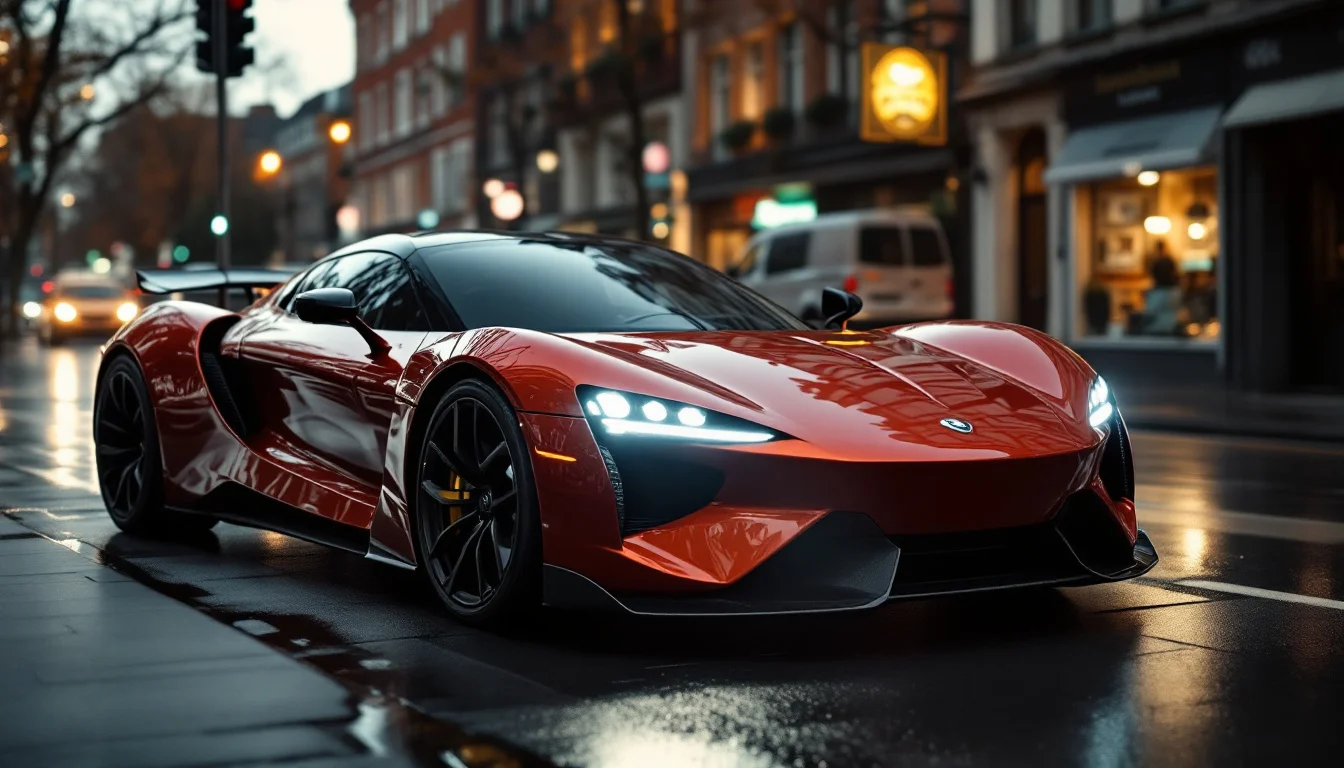
For automotive enthusiasts in Belgium, the regulatory landscape has never been tighter. The European Commission tightened the 2030 CO2 target to minus 55% and added a ban on the sale of new combustion models—encompassing petrol, diesel, and traditional hybrids—from 1 January 2035, though exceptions exist for synthetic fuels (e-fuels) and the regulation includes a 2026 review clause (FEBIAC, "What are the legislative priorities in Europe for the automotive sector", 2024).
With less than a decade remaining to purchase a new internal combustion engine, the market for high-performance vehicles has rapidly adapted. Rather than forcing buyers into an immediate compromise, manufacturers have re-engineered the plug-in hybrid electric vehicle (PHEV) into a strategic financial tool. By pairing massive electrical reserves with large-displacement combustion engines, automakers are delivering extreme power figures.
For the specialized Belgian tax resident, particularly in Flanders, this engineering approach unlocks unique administrative advantages. The modern performance PHEV operates as a calculated option, allowing drivers to maintain a high-horsepower sports car experience while legally reducing their tax burden.
Key Takeaways
- The Regulatory Clock: The European Commission added a ban on the sale of new combustion models — petrol, diesel, as well as hybrids — from 1 January 2035, subject to an e-fuels exemption and a 2026 review clause.
- The Registration Exemption: In the Flemish Region, a specific administrative procedure has historically allowed PHEV owners to request a full exemption from the registration tax (BIV/TMC), though buyers must verify its continued availability amid tax reforms.
- The CO2 Threshold Advantage: Vehicles emitting below 149 g/km of CO2 (WLTP) trigger a green circulation tax reduction in Flanders, effectively discounting the financial penalty of high horsepower.
- The Weight Discipline: Dragging over 2,000 kg of hybrid hardware without regular charging negates the financial logic by severely increasing real-world fuel consumption.
The 2026 Performance Roster: When Electricity Fuels Horsepower
The definition of a hybrid vehicle has drastically shifted away from purely economy-focused commuting. In 2026, modern plug-in hybrids typically utilize a battery capacity of 15 to over 30 kWh, generating a combined system output that often sits between 200 and over 500 hp (AutoScout24, "Plug-in hybride", 2024; Emil Frey, "Plug-in Hybrid", 2024). This heavy engineering pushes vehicle weight frequently beyond the 2,000 kg mark.
Hypercar Power, Heavyweight Engineering
Automakers are using electrification to push performance boundaries rather than simply extending fuel economy. For those seeking absolute power, the market offers exceptionally potent drivetrains.
A prime example of this engineering philosophy, the Volkswagen Touareg R, generates a massive system output of 340 kW (462 hp) alongside 700 Nm of maximum torque (Volkswagen Newsroom, "The Touareg R", 2023). The electric motor fills the torque gaps of the combustion engine, providing immediate acceleration that masks the heavy curb weight.
Extended Daily Electric Ranges
For more compact sports models, the engineering focus shifts toward maximizing the daily electric range to offset the internal combustion emissions. This capacity allows drivers to conduct all daily urban driving entirely on electric power, preserving the high-output combustion engine strictly for spirited weekend driving or long-distance travel.
How Much More Circulation Tax Does a 272 g/km Petrol Car Pay Than a PHEV?
The financial appeal of the high-performance PHEV in Flanders hinges on the specific mechanics of the regional circulation tax (verkeersbelasting). The Flemish tax authority utilizes a formula based on power in kW as its base, adjusted for CO2 emissions under the green circulation tax mechanism, to penalize polluting vehicles and reward efficient ones.
The Mathematical Penalty for Combustion
In Flanders, the green circulation tax mechanism adds a reported 0.30% per gram of CO2/km above a baseline of 149 g/km (WLTP, capped at 500 g/km). Conversely, it reduces the tax by 0.30% per gram below 149 g/km down to a floor of 24 g/km for vehicles first registered in 2021 or later (Vlaanderen.be, "Verkeersbelastingen voor personenwagens", 2025). As these exact fiscal parameters change frequently, buyers must verify the current figures directly with the Vlaamse Belastingdienst. Note that the green circulation tax applies to passenger cars, dual-use vehicles and minibuses registered with the DIV from 1 January 2016 and not taken in leasing; for leasing vehicles, only the kW-based base rate applies.
To understand the severity of this penalty on traditional engines, we can look at purely hypothetical administrative examples. Real-world WLTP emissions vary enormously by model and drivetrain—a standard EURO 5 petrol engine, for instance, might actually emit anywhere from 120 to over 200 g/km depending on the vehicle.
If a buyer registers a purely hypothetical petrol sports car emitting exactly 272 g/km, they face a significant surcharge. Illustrative estimate: The vehicle sits 123 grams above the 149 g/km threshold. Multiplied by 0.30%, this specific hypothetical petrol car triggers a +36.9% adjustment on its annual base circulation tax.
The Hybrid Discount Mechanism
This formula creates the advantage that plug-in hybrids can utilize. Because a performance PHEV incorporates a large battery, its official WLTP CO2 emissions drop drastically.
Instead of facing a surcharge for accessing high horsepower, the PHEV owner may benefit from the reduction zone. Illustrative estimate: A hybrid emitting 49 g/km sits 100 grams below the threshold, translating to a 30% reduction in the base circulation tax. The WLTP-based CO2 adjustment gives PHEVs a lower emissions rating, which can reduce the annual circulation tax of a high-horsepower sports car simply because it carries an electric motor capable of passing the test cycle. The actual tax saving depends on the individual vehicle's kW rating and registered CO2 figure.
Do Plug-in Hybrids Still Qualify for a Flemish BIV Exemption in 2026?
Beyond the annual circulation tax, the initial registration phase in 2026 presents a notable administrative distinction for sports car buyers. The regulations have shifted in a way that financially differentiates pure electric vehicles from their hybrid counterparts during the initial purchase process.
The 2026 Paradigm Shift for Pure EVs
Historically, pure electric vehicles enjoyed total tax immunity in Flanders to spur adoption. However, this absolute zero-tax status has been revoked. Zero-emission vehicles (fully electric or hydrogen) registered in Flanders from 1 January 2026 pay a flat annual circulation tax (cited around 107.16 euros, additional décimes included, indexed annually on 1 July) and a flat registration tax (BIV/TMC) (cited around 61.50 euros, not indexed). Buyers must verify these precise amounts directly with the Vlaamse Belastingdienst. Vehicles registered up to 31 December 2025 remain exempt (Vlaanderen.be, "Voertuigen volledig op elektriciteit of waterstof", 2025).
Zero Registration Tax on Request
Despite the new flat taxes levied on fully electric cars, the Flemish tax code retains a specific provision that plug-in hybrid buyers can utilize. In the Flemish Region, vehicles running on hydrogen or natural gas (CNG/LNG), electric vehicles, and critically, plug-in hybrids, have historically been able to obtain an exemption from the registration tax (BIV/TMC) on request (Vlaanderen.be, "Taxe de mise en circulation (TMC)", 2025).
This creates a notable tax distinction. A driver purchasing a heavy, 400+ horsepower PHEV could submit a request and potentially pay 0 euros in BIV, bypassing the initial registration costs. Meanwhile, a buyer registering a zero-emission electric car from 1 January 2026 is billed the new flat fee. For the performance enthusiast, this administrative provision offers meaningful upfront savings on luxury vehicles, though buyers must verify the exact procedural requirements and the current status of the PHEV exemption with the Vlaamse Belastingdienst, as the regime is subject to ongoing regional tax reforms and the exemption is request-based, not automatic.
The Weight Paradox: Why Your 2,000kg Sports Car Demands Discipline
While the Flemish tax code offers favourable treatment for high-performance plug-in hybrids, the physical reality of vehicle engineering demands absolute operational discipline from the driver to maintain any true financial efficiency.
The core issue with heavy performance hybrids is the dual-powertrain architecture. Why an uncharged PHEV becomes inefficient is purely a matter of physics: because the vehicle carries two complete drivetrains, the combustion engine must not only drive the car but also drag the extra weight of the battery and electric motor (AutoScout24, "Plug-in hybride", 2024).
If the 2,000+ kg sports car is rarely plugged in, real-world consumption can rise sharply. A buyer who treats a PHEV like a traditional petrol car—ignoring the charging cable entirely—will face fuel bills that easily outpace the tax savings generated by the BIV exemption.
Do PHEVs Still Have City Access in 2026?
For disciplined drivers who do charge their vehicles, the regulatory environment for driving these combustion-hybrid engines into urban centers remains surprisingly stable in Flanders.
The Flemish Government decided on 28 November 2024 to cancel all planned reinforcements of low-emission zone (LEZ) access rules, taking effect from 1 January 2026 (VMM, "Criteria lage-emissiezones op basis van euronormen", 2024).
While political decisions are not permanent legal guarantees, this legislative freeze indicates that a newly purchased PHEV will not suddenly be banned from Flemish city centers in the immediate future, preserving its daily utility. Note that the Brussels LEZ operates under separate regional rules: an indicative estimate of 400,000 excessively polluting vehicles have been excluded from the Brussels low-emission zone since 1 January 2026. Buyers should verify the applicable LEZ rules for each region where they intend to drive.
FAQ: High-Performance Hybrids in Belgium
How do PHEV owners avoid the registration tax in Flanders?
They must follow a specific administrative procedure. The exemption is not automatic; owners must actively submit a request to the Vlaamse Belastingdienst to obtain a full exemption from the registration tax (BIV/TMC), provided the exemption is still maintained under current tax reforms.What is the exact CO2 threshold for a green tax adjustment in Flanders?
Vehicles first registered in 2021 or later and emitting below 149 g/km of CO2 under the official WLTP cycle benefit from a reduction in the green circulation tax base. The discount mathematically scales up as the emissions drop further below this mark, down to a floor of 24 g/km. Because tax parameters change regularly, these specific figures should be verified directly with the Vlaamse Belastingdienst. For vehicles first put into circulation before 2021, the threshold is 122 g/km under the NEDC method.How do alternative fuels like CNG compare to the 149 g/km tax threshold?
Even alternative combustion options can struggle against this baseline. For instance, depending on the model, vehicles running on natural gas (CNG) may still emit CO2 levels above the threshold, meaning they face a tax surcharge rather than the discount enjoyed by low-WLTP plug-in hybrids.Are there purchase subsidies for plug-in hybrids for private buyers in Belgium in 2026?
No. There are no general federal purchase subsidies for plug-in hybrids for private buyers in Belgium in 2026, though buyers should check for localized municipal or regional incentives. Plug-in hybrids may still deliver fiscal advantages for professional users and company cars in certain cases, depending on CO2 emissions, electric range, registration date, and other factors (AutoScout24, "Plug-in hybride", 2026).Conclusion: A Strategic Bridge to the Zero-Emission Era
The high-performance plug-in hybrid in 2026 represents a precise alignment of automotive engineering and regional tax strategy. For the Belgian driver in Flanders, purchasing a 400+ horsepower vehicle with a 2,000 kg curb weight is an exercise in compliance, provided the vehicle utilizes a battery large enough to pass the WLTP formula. As the 2035 European deadline approaches—and pending the outcomes of the 2026 EU review clause—these specialized vehicles serve as a transitional legal mechanism to acquire extreme combustion power under current environmental tax structures.
--- This article is for informational purposes only and does not constitute financial advice. Consult a licensed financial advisor before making any investment decisions.